Showing posts with label White. Show all posts

Sedum album

English: White Stonecrop
Nederlands: Wit vetkruid
Español: Uña de gato menor - Uña de gato blanca - Arroz
Français: Orpin blan - Sédum blanc
Deutsch: Weiße Fetthenne - Weißer Mauerpfeffer

Family: Crassulaceae - Stonecrop family
Flowering time: June-July
Height: 15-20cm
Altitude: to 2500m
Colour: white, pink follicles
Flower: 6-9mm in much-branched flat-topped clusters
Leaves: alternate, fleshy, nearly cylindrical with a blunt, rounded tip
Habitat: seashore rocks, dunes, rocky meadows, screes, roofs, old walls
Distribution: almost all European countries


Notes: White stonecrop is a tufted perennial herb that forms mat-like stands. Much of the year the stems are short, semi prostrate and densely clad in leaves. At the flowering time the stems lengthen and are erect, occasionally branched and often pinkish-brown. Sedum album is sometimes cultivated in gardens and is a successful plant on green roofs. White Stonecrop has naturalized in a number of countries.

Related key words: Kapittelduinen Hoek van Holland, Junta de los Rios Bérchules, Trevenque, Vereda de la Estrella, Venta El Nogal, subida al Veleta, dehesa de San Jerónimo, cuenca del río Monachil, Cerro de los Poyos, Barranco de las Víboras, Sierra Nevada, Sierra de Huétor, Granada, Andalucía, Andalusia, Andalusië, Pirineos, Pyrenees, Pyreneeën, Barranco de Estiviella (Hecho), Monte Oturia (Yebra de Basa), Balcón de Pineta (Bielsa), Picos de Europa, Spain, Alps

Parnassia palustris

English: Grass of Parnassus - Northern Grass-of-Parnassus - Bog-star
Nederlands: Parnassia
Español: Hepática blanca - Hierba del Parnaso
Français: Parnassie des marais
Deutsch: Sumpf-Herzblatt - Studentenröschen

Family: Parnassiaceae - Grass of Parnussus family
Flowering time: June-September
Height: 10-30cm
Altitude: to 2600m
Colour: white
Flower: solitary, 15-30mm, 5 sepals, 5 petals, 5 stamens
Leaves: basal, heart-shaped
Habitat: damp mountain pastures, wet dune slacks, fens, streamside flushes
Distribution: most European countries, in southern Europe only in the mountains


Notes: Parnassia palustris can form extensive colonies. Plants of Grass of Parnassus flower for about a week. During this period the stamens lean, one or two at the time, over the stigma, retiring after they have shed their pollen and giving place to others. The branched staminodes have a solid nectar-secreting base, glistening like a drop of honey. In Belgium Parnassia palustris is on the Belgium Red List of vascular plants classified as threatened with extinction. In the Netherlands it is on the Dutch Red List of vascular plants classified as vulnerable. In this country it can be found in wet dune slacks. In the Sierra Nevada in southern Spain Parnassia Palustris can be found in the borreguiles (wet pastures) and along stream sides above 2000m.

Related key words: Kapittelduinen Hoek van Holland, Nederlandse Rode Lijst, Barranco de las Albardas Trevélez, Borreguiles del Barranco de San Juan, Prado del Espino, Corral de Veleta, San Jerónimo Monachil, Sierra Nevada, Granada, Andalucía, Andalusia, Andalusië, Pirineos, Pyrenees, Pyreneeën, Picos de Europa, Spain, Alps

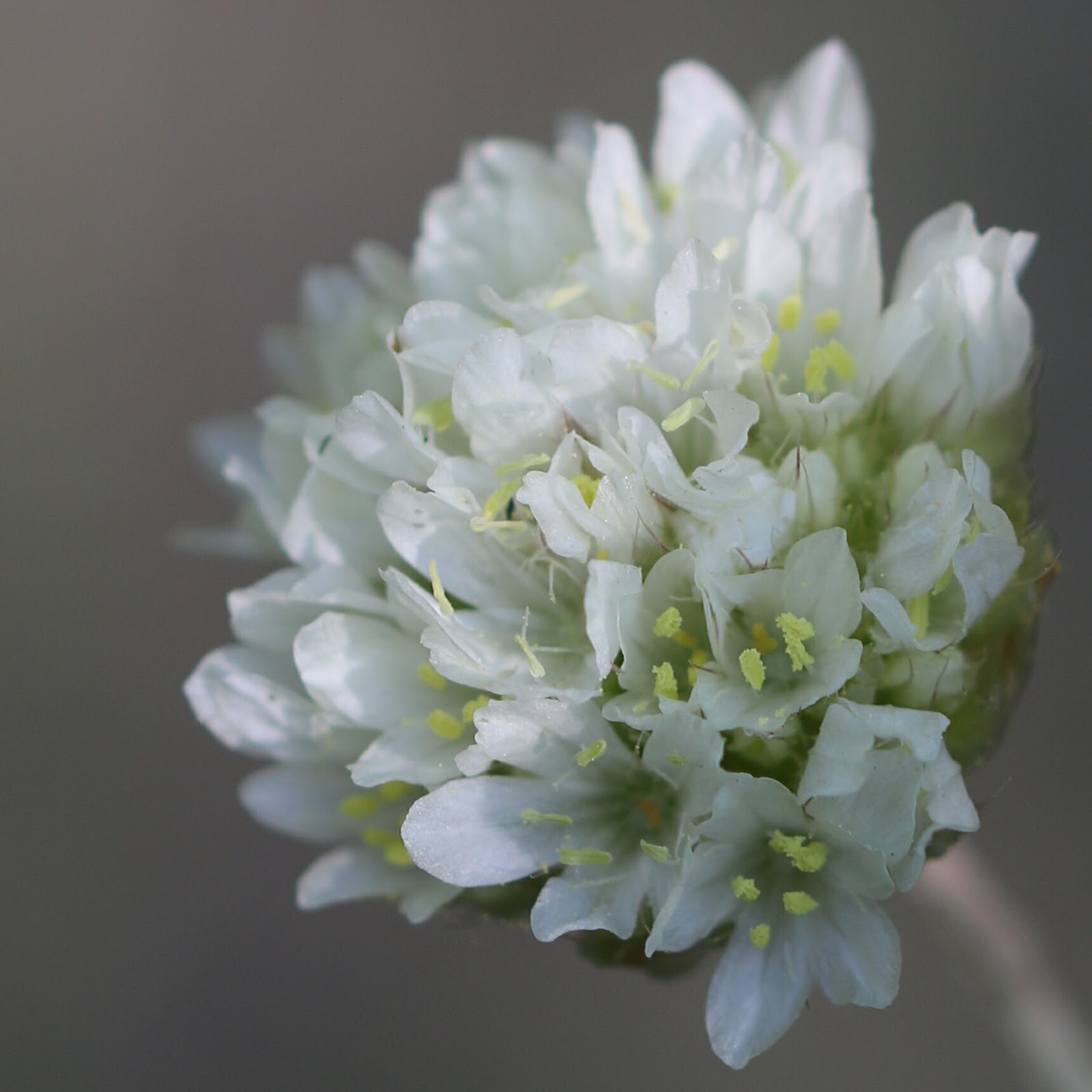
Armeria villosa subsp. bernisii

English:
Nederlands:
Español:
Français:
Deutsch:

Family: Plumbaginaceae - Thrift family
Flowering time: May-July
Height: 20-40cm
Altitude: 600-2200m
Colour: white
Flower: calyx less than 7,5mm, 5 stamens, 5 styles
Leaves: linear to linear-lanceolate, 1-3 nerves
Habitat: scrub, grassland, indifferent to type of substrate
Distribution: Granada and Almería provinces in southern Spain


Notes: Armeria villosa subsp. bernisii is endemic to mountain ranges in Granada and Almería in southern Spain. In Andalucía six subspecies of Armeria villosa are recognized and all of them bear white flowers. Other subspecies are: Armeria villosa subsp. villosa, Armeria villosa subsp. longiaristata, Armeria villosa subsp. carratracens, Armeria villosa subsp. provillosa and Armeria subsp. alcaracensis. Flora ibérica considers Armeria villosa subsp. bernisii possibly to be hybrid from Armeria villosa subsp. longiaristata and Armeria filicaulis. In the Sierra Nevada both the subspecies bernisii as well as the subspecies longiaristata can be found. Armeria villosa subsp. longiaristata has lanceolate leaves with three to five nerves, the calyx is more than 8mm and this subspecies grows and on calcareous soils.

Related key words: Vereda de la Estrella, Canjáyar, carretera al Veleta, dehesa del Camarate, Fuente de Don Manuel, Barranco del Collado, pista forestal encima de Bérchules, Barranco de las Víboras, Cañar, Aldeire, Bubión, Dornajo, Alquife, Sierra Nevada, Granada, Sierra de Huétor, Andalucía, Andalusia, Andalusië, butterfly

Polygala boissieri

English:
Nederlands:
Español: Polígala - Polígala rosada
Français:
Deutsch:

Family: Polygalaceae - Milkwort family
Flowering time: April-August
Height: to 40cm
Altitude: 900-2100m
Colour: pink, white
Flower: lower petals are not hidden
Leaves: basal leaves obovate or oblanceolate
Habitat: mountains, limestone-dolomite areas
Distribution: a number of mountain chains in Andalusia
Synonyms: Polygala rosea auct. hisp. - Polygala nicaeensis subsp. caesalpini


Notes: Polygala boissieri was named after the Swiss botanist Pierre Edmond Boissier (1810-1885). In the Sierra Nevada in southern Spain it can be found next to for example Erodium boissieri and wild peonies (Paeonia broteroi and Paeonia coriacea).

Related key words: Trevenque, Jardín bótanico de la Cortijuela, Sierra Nevada, Sierra de Huétor, Granada, Sierra de Gádor, Sierra de Los Filabres, Almería, Andalucía, Andalusia, Andalusië, Spain, butterfly, Milkwort, Vleugeltjesbloem, Kreuzblume

Asphodelus macrocarpus

English: White Asphodel - Asphodel
Nederlands: Witte affodil
Español: Gamón blanco - Abozo - Asfodelo - Gamoncillo - Varilla de San José
Français: Asphodèle blanc - Asphodèle de Villars
Deutsch: Weißer Affodill

Family: Liliaceae - Lily family
Flowering time: March-July
Height: 5-150cm
Altitude: to 2000m
Colour: white
Flower: funnel-shaped, diameter 4cm, six elongated petals
Leaves: in basal tufts, linear, pointed, grey-green
Habitat: meadows, heaths, open woodland, hilly and mountain habitats
Distribution: central and southern Spain, southwest France, southern Alps, western Balkans


Notes: Asphodelus is often seen in great numbers in areas subjected to grazig as they are generally unpalatable to livestock. The swollen roots of this plant are toxic. Two subspecies of Asphodelus macrocarpus are recognized, of which Asphodelus macrocarpus subsp. rubescens can be found for example in the Sierra de las Nieves, Sierras de Tejeda, Almijara and Alhama and Parque Natural Torcal de Antequera in southern Spain. Asphodelus albus subsp. delfinensis can be found in the Pyrenees, Asphodelus albus subsp. occidentalis in the Picos de Europa. Asphodelus fistulosus is a more delicate looking, less tall species that can not be found at higher altitudes. Asphodelus cerasiferus can also only be found at lower altitudes.

Related key words: Vereda de la Estrella, Jardín botánico Hoya de Pedraza, Sierra Nevada, Granada, Sierra de Huétor, Alpujarras, Tarifa Parque natural del Estrecho, Sierra de las Nieves, Andalucía, Andalusia, Andalusië, Pirineos, Pyrenees, Pyreneeën, Picos de Europa, Alps, insect, Xanthorrhoeaceae

Ophrys scolopax

English: Woodcock Bee Orchid - Woodcock Orchid - Woodcock Ophrys
Nederlands: Sniporchis
Español: Abejera becada - Orquídea becada - Orquídea perdiz - Abejeta
Français: Ophrys bécasse
Deutsch: Schnepfen-Ragwurz

Family: Orchidaceae - Orchid family
Flowering time: March - June
Height: 15 to 65cm
Altitude: to 2000m
Colour: sepals pink or purplish-violet, rarely green or white
Flower: petals usually the same colour as the sepals; lip 8-12mm
Leaves: basal leaves lanceolate; stems leaves narrower and more pointed
Habitat: maquis, garrigue, meadows, open woodland
Distribution: around the Mediterranean
Synonym: Ophrys scolopax subsp. scolopax


Notes: Ophrys scolopax has many varieties, forms and subspecies.

Related key words: El Hervidero, Sierra Nevada, Granada, Andalucía, Andalusia, Andalusië, Las Ripas (Hecho), Las Blancas (Borau), Campodarbe (Boltaña), Pirineos, Pyrenees, Pyreneeën, Picos de Europa