Showing posts with label Sierra de Huétor. Show all posts

Linaria aeruginea subsp. aeruginea

English:
Nederlands:
Español: Conejillos
Français:
Deutsch:

Family: Plantaginaceae - Plantain family
Flowering time: April-July
Height: 5-20cm
Altitude: 200-2200m
Colour: brown-red, purple, violet, yellow or whitish
Flower: corolla 15-27 mm long, spur 5-11mm, to 35 flowers
Leaves: linear with margins rolled under
Habitat: dry rocky habitats, grasslands, scrub
Distribution: southern and eastern part the Iberian Peninsula and Balearic Islands
Synonym: Linaria melanantha


Notes: In the Sierra Nevada in southern Spain, there is another subspecies of Linaria aeruginea, namely Linaria aeruginea subsp. nevadensis. This subspecies has yellow flowers, is endemic to this mountain range and can be found at altitudes between 2300 and 3300 m.

Related key words: finca, Alpujarras, Arenales del Trevenque, Sierra Nevada, Sierra de Huétor, Sierra de Baza, Sierras Almijara y Tejeda, Sierra del Manar, Sierra de la Mora, Sierra de las Albuñuelas, Sierra de La Sagra, Granada, Sierra de las Nieves, Málaga, Andalucía, Andalusia, Andalusië, Veronicaceae, Scrophulariaceae

Sedum mucizonia

English:
Nederlands:
Español: Uña de gato - Uña de pajarito
Français:
Deutsch:

Family: Crassulaceae - Stonecrop family
Flowering time: April-August
Height: 5-15cm
Altitude: 100-2500m
Colour: pink
Flower: 4-6mm
Leaves: 7-15mm, pubescent, oblong, rounded
Habitat: cracks of rocks, old walls, pastures
Distribution: central and southern part of the Iberian Peninsula
Synonyms: Cotyledon mucizonia - Cotyledon hispida - Mucizonia hispida


Notes: Sedum mucizonia can only be found in central and southern part of the Iberian Peninsula, Spain and Portugal, and north-west Africa

Related key words: Junta de los Rios Bérchules, Nigüelas, Alpujarras, Vereda de la Estrella, Mirador de Canales, Mirador de Trevélez, Los Atalayones Dílar, Sierra Nevada, Sierra de Huétor, Granada, Andalucía, Andalusia, Andalusië

Geum sylvaticum

English:
Nederlands:
Español: Hierba del ermitaño - Cege
Français: Benoîte des bois
Deutsch:

Family: Rosaceae - Rose family
Flowering time: April-June
Height: 10-40cm
Altitude: 500-1800m
Colour: yellow
Flower: usually 5 petals, fruits have hooked achenes
Leaves: basal leaves and stem leaves different
Habitat: shaded grasslands, clearings in holm oak or pine forests
Distribution: western Mediterranean; France and Spain
Synonym: Geum pyrenaicum var. sylvaticum


Notes: In the Sierra Nevada in southern Spain, apart from Geum sylvaticum three other Geum species can be found: Geum heterocarpum, Geum rivale and Geum urbanum.

Related key words: San Jerónimo, Güéjar Sierra, Jardin Botánico la Cortijuela, Sierra Nevada, Granada, Andalucía, Andalusia, Andalusië, Pirineos, Pyrenees, Pyreneeën, Picos de Europa, Alps, nagelkruid, Avens, Nelkenwurz

Sedum album

English: White Stonecrop
Nederlands: Wit vetkruid
Español: Uña de gato menor - Uña de gato blanca - Arroz
Français: Orpin blan - Sédum blanc
Deutsch: Weiße Fetthenne - Weißer Mauerpfeffer

Family: Crassulaceae - Stonecrop family
Flowering time: June-July
Height: 15-20cm
Altitude: to 2500m
Colour: white, pink follicles
Flower: 6-9mm in much-branched flat-topped clusters
Leaves: alternate, fleshy, nearly cylindrical with a blunt, rounded tip
Habitat: seashore rocks, dunes, rocky meadows, screes, roofs, old walls
Distribution: almost all European countries


Notes: White stonecrop is a tufted perennial herb that forms mat-like stands. Much of the year the stems are short, semi prostrate and densely clad in leaves. At the flowering time the stems lengthen and are erect, occasionally branched and often pinkish-brown. Sedum album is sometimes cultivated in gardens and is a successful plant on green roofs. White Stonecrop has naturalized in a number of countries.

Related key words: Kapittelduinen Hoek van Holland, Junta de los Rios Bérchules, Trevenque, Vereda de la Estrella, Venta El Nogal, subida al Veleta, dehesa de San Jerónimo, cuenca del río Monachil, Cerro de los Poyos, Barranco de las Víboras, Sierra Nevada, Sierra de Huétor, Granada, Andalucía, Andalusia, Andalusië, Pirineos, Pyrenees, Pyreneeën, Barranco de Estiviella (Hecho), Monte Oturia (Yebra de Basa), Balcón de Pineta (Bielsa), Picos de Europa, Spain, Alps

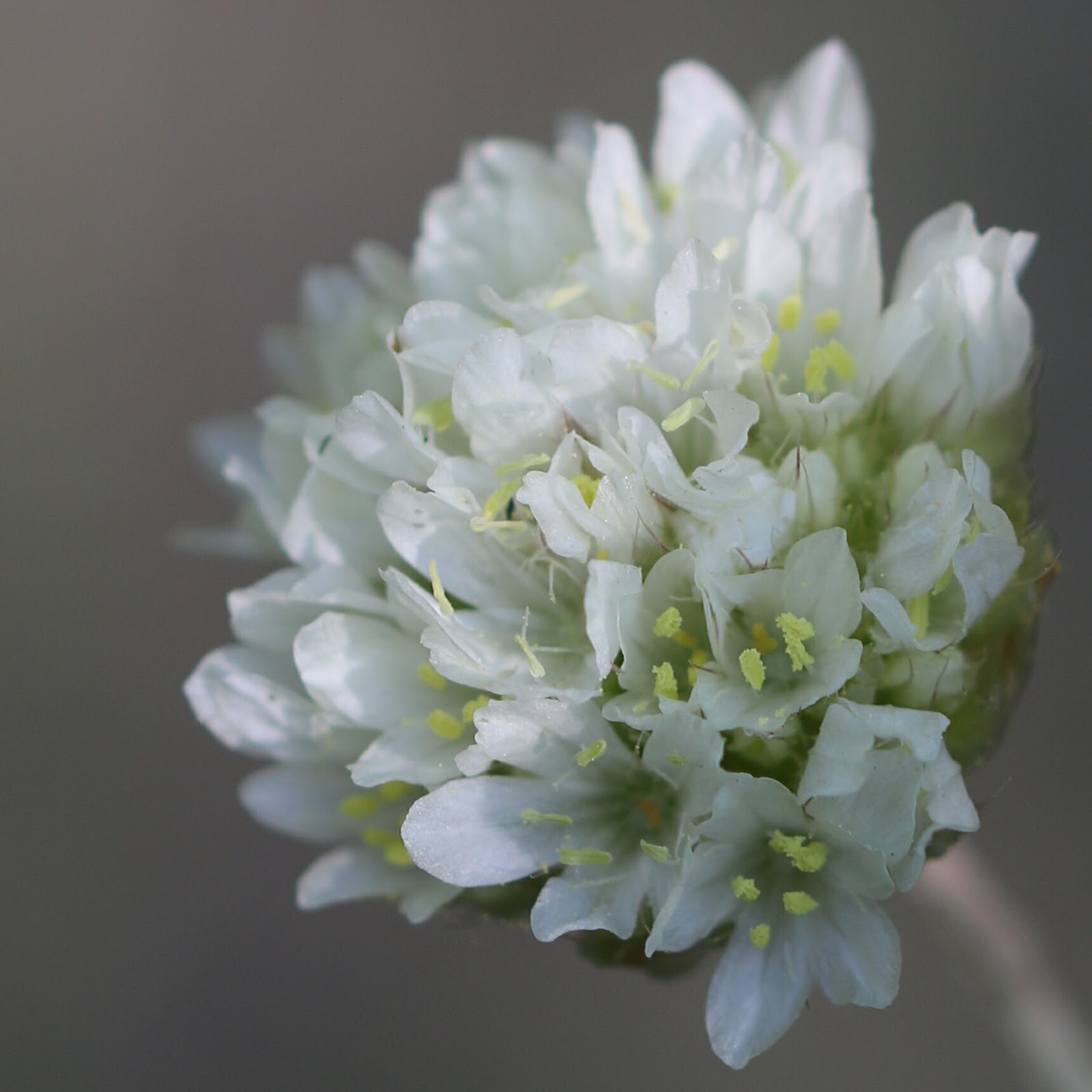
Armeria villosa subsp. bernisii

English:
Nederlands:
Español:
Français:
Deutsch:

Family: Plumbaginaceae - Thrift family
Flowering time: May-July
Height: 20-40cm
Altitude: 600-2200m
Colour: white
Flower: calyx less than 7,5mm, 5 stamens, 5 styles
Leaves: linear to linear-lanceolate, 1-3 nerves
Habitat: scrub, grassland, indifferent to type of substrate
Distribution: Granada and Almería provinces in southern Spain


Notes: Armeria villosa subsp. bernisii is endemic to mountain ranges in Granada and Almería in southern Spain. In Andalucía six subspecies of Armeria villosa are recognized and all of them bear white flowers. Other subspecies are: Armeria villosa subsp. villosa, Armeria villosa subsp. longiaristata, Armeria villosa subsp. carratracens, Armeria villosa subsp. provillosa and Armeria subsp. alcaracensis. Flora ibérica considers Armeria villosa subsp. bernisii possibly to be hybrid from Armeria villosa subsp. longiaristata and Armeria filicaulis. In the Sierra Nevada both the subspecies bernisii as well as the subspecies longiaristata can be found. Armeria villosa subsp. longiaristata has lanceolate leaves with three to five nerves, the calyx is more than 8mm and this subspecies grows and on calcareous soils.

Related key words: Vereda de la Estrella, Canjáyar, carretera al Veleta, dehesa del Camarate, Fuente de Don Manuel, Barranco del Collado, pista forestal encima de Bérchules, Barranco de las Víboras, Cañar, Aldeire, Bubión, Dornajo, Alquife, Sierra Nevada, Granada, Sierra de Huétor, Andalucía, Andalusia, Andalusië, butterfly

Trifolium stellatum

English: Starry Clover - Star Clover - Starry-headed trefoil
Nederlands: Sterklaver
Español: Trébol estrellado
Français: Trèfle étoilé
Deutsch: Stern-Klee

Family: Fabaceae - Leguminosae - Legume family - Pea family
Flowering time: March-July
Height: 10-25cm
Altitude: to 1500m
Colour: pink, sometimes reddish or yellowish
Flower: 4-12mm, borne in terminal solitary globose heads
Leaves: leaflets oval, notched, margins and veins bright green
Habitat: roadsides, stony places, waste ground, cultivated fields
Distribution: the Mediterranean region, including the Canary Islands


Notes: Trifolium stellatum has become naturalised in south-eastern Great Britain. This plant is easily identified by its starry calyces.

Related key words: finca, Alpujarras, Vereda de la Estrella, Sierra Nevada, Sierra de Huétor, Granada, Andalucía, Andalusia, Andalusië, Alps, butterfly