Showing posts with label Blue. Show all posts

Aphyllanthes monspeliensis

English: Blue Aphyllanthes
Nederlands:
Español: Junquillo - Chunza - Chunqueta - Juncia - Clavel seco
Français: Aphyllanthe de Montpellier - Oeillet bleu de Montpellier
Deutsch: Binsenlilie - Blaue Binse

Family: Asparagaceae - Asparagus family
Flowering time: April-July
Height: 10-40cm
Altitude: 400-1700m
Colour: blue, rarely white
Flower: 25-30mm, in a head of 2-3, tepals with a dark mid-vein
Leaves: membranous sheaths
Habitat: dry grassy places, rocky terrain, garrigue
Distribution: Iberian Peninsula eastwards to northwestern Italy, including the Balearic Islands


Notes: Rush-like bluish-green plant with reddish-brown leaves.

Related key words: Rio Aguas Blancas, Jardín botánico la Cortijuela, Sierra Nevada, Granada, Andalucía, Andalusia, Andalusië, Urdués (Valle de Hecho), Solana (Villanúa), Sierra de Laspún (Campo), Pirineos, Pyrenees, Pyreneeën, Picos de Europa, Alps

Linum narbonense

English: Beautiful Flax - Blue Flax
Nederlands: Frans vlas - Blauw vlas
Español: Lino azul - Lino de Narbona
Français: Lin de Narbonne
Deutsch: Französischer Lein

Family: Linaceae - Flax family
Flowering time: April-June (August in the Pyrenees)
Height: 20-50cm
Altitude: 0-1600m
Colour: bright azure-blue
Flower: petals 25-40mm, sepals 10-14mm long
Leaves: greyish, alternate, without basal glands, linear to lanceolate, long-pointed, mostly 1- or 3-veined
Habitat: grassy, rocky habitats, dolomite, limestone slopes
Distribution: west and central Mediterranean; Spain and Portugal, Alps, eastwards to the Balkan


Notes: In a number of countries, for example in the Netherlands, Linum narbonense is grown as a garden plant. Linum narbonense is similar in appearance to Linum usitatissimum or cultivated flax, a food and fiber crop. The textiles made from cultivated flax are known as linen and the oil that is made from the seeds is known as linseed oil.

Related key words: PR-A 21 Canal de la Espartera-Arenales del Trevenque, jardín botánico de la Cortijuela, Sierra Nevada, Sierra de Huétor, Granada, Andalucía, Andalusië, Spain, La Trapa (Villanúa), La Ripera (Panticosa), Barranco de Viú (Campo), Pirineos, Pyrenees, Pyreneeën, Picos de Europa, vallée du Buech, vallée de la Durance, Alpes, Alps, lijnzaad, lijnzaadolie 

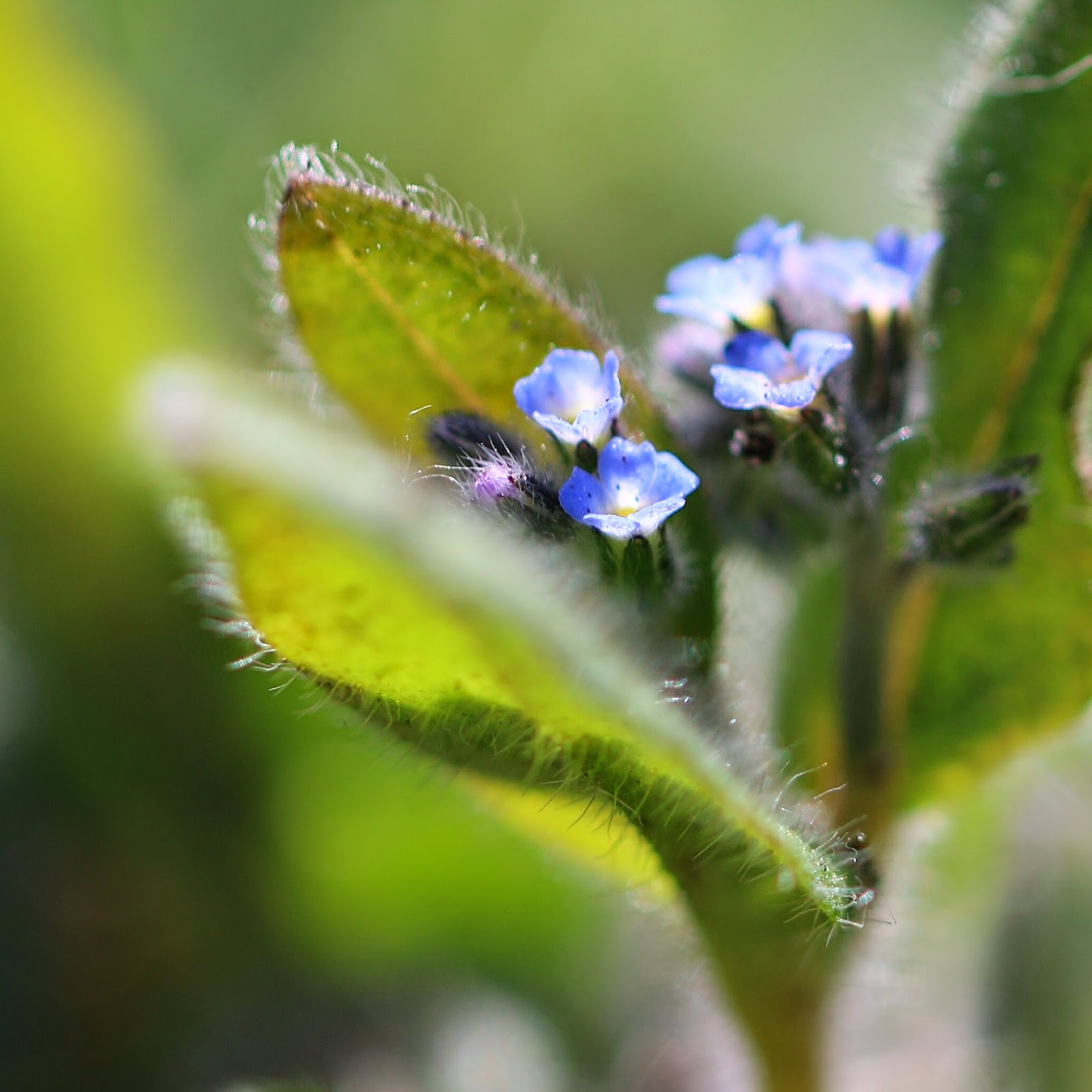
Myosotis ramosissima

English: Early Forget-me-not
Nederlands: Ruw vergeet-mij-nietje
Español: Nomeolvides temprano - Nomeolvides de las colinas - Nomeolvides azul
Français: Myosotis rameux - Myosotis hérissé
Deutsch: Hügel-Vergissmeinnicht - Raues Vergissmeinnicht

Family: Boraginaceae - Borage family
Flowering time: April-July
Height: 5-30cm
Altitude: to 2100m
Colour: bright blue
Flower: 1,5-3mm
Leaves: in a rosette, lanceolate, stem leaves oblong, unstalked
Habitat: pastures, ditches, fields, roadsides, dunes, dry open habitats
Distribution: throughout northern, western and central Europe
Synonyms: Myosotis gracillima - Myosotis hispida


Notes: Early Forget-me-not is one of the first Forget-me-nots to come into flower in early spring.

Related key words: Kapittelduinen Hoek van Holland, Sierra de Huétor, Andalucía, Pyrenees, Pyreneeën, Pirineos

Veronica hederifolia

English: Ivy-leaved Speedwell - Ivyleaf speedwell
Nederlands: Klimopereprijs
Español: Hierba gallinera
Français: Véronique à feuilles de lierre
Deutsch: Efeu-Ehrenpreis - Efeublättriger Ehrenpreis

Family: Plantaginaceae-Plantain family
Flowering time: March-August (February-May in Spain)
Height: 5-10cm
Altitude: to 1800m
Colour: pale blue, pale lilac
Flower: 2-2,5mm, solitary
Leaves: kidney-shaped, hairy, 3-7 lobes
Habitat: cultivated land, deciduous woods, hedgerows
Distribution: many European countries, probably introduced in much of northern Europe


Notes: Ivy-leaved Speedwell is a low hairy annual herb growing from a taproot and producing stems of 60 centimeters long which are branched at the base. The stems are lined with rounded leaves with blades which are divided shallowly into 3 to 5 lobes and borne on petioles. Solitary pale lilac flowers occur in leaf axils. Veronica hederifolia is often self-pollinated. It germinates in autumn and blooms in early spring. In Europe four subspecies are distinghuished: Veronica hederifolia subsp. hederifolia (Akkerklimopereprijs), Veronica hederifolia subsp. lucorum (Bosklimopereprijs), Veronica hederifolia subsp. insularis and Veronica hederifolia subsp. triloba. Veronica hederifolia subsp. lucorum grows more upright, the end lobe of its leaves is longer than wide and the style on the capsule only 0,5mm long (not 07-1mm).

Related key words: Harderbos Biddinghuizen, Sierra de Huétor

Chionodoxa siehei

English: Forbes' Glory-of-the-Snow
Nederlands: Grote sneeuwroem
Español:
Français: Gloire des neiges
Deutsch: Schneestolz

Family: Asparagaceae - Asparagus family
Flowering time: March-April
Height: 10-25cm
Altitude:
Colour: blue, sometimes white or pink
Leaves: two or three, linear, red edge
Flower: 20-35mm, style 1-1,5mm
Habitat: mountains in Crete, Cyprus and Turkey
Distribution: native to Greece and Turkey
Synonyms: Scilla siehei - Scilla forbesii - Chionodoxa luciliae


Notes: Chionodoxa siehei is a bulbous perennial that flowers in early spring. After flowering, it goes into dormancy until the next spring. The seeds of Forbes' Glory of the snow contain an ant bread. Fallen seeds are collected by ants, the sweet bread is eaten and the bitter seed is planted. Forbes' Glory-of-the-snow was introduced as a garden plant in the Netherlands around 1880. In this country it is now a naturalized species. Chionodoxa siehei is similar to Chionodoxa sardensis. The flowers of Forbes' Glory-of-the-Snow are larger, the style is shorter and the colour is paler blue compared to those of  Lesser Glory-of-the-Snow.

Related key words: Heemtuin Kralingse Bos Rotterdam, Landgoed Elswout Overveen, bijgoed stinsenflora

Scilla bifolia

English: Alpine Squill - Two-leaf Squill
Nederlands: Vroege sterhyacint
Español:
Français: Scille à deux feuilles - Étoile bleue
Deutsch: Zweiblättrige Blaustern - Sternhyazinthe - Zweiblättrige Meerzwiebel

Family: Asparagaceae - Asparagus family
Flowering time: March-June
Height: 10-25cm
Altitude: to 2000m
Colour: violet-blue, rarely white or lilac
Leaves: two or rarely three, broadly linear, lance-shaped, curved, fleshy, shiny
Habitat: shady places, woods of beech or deciduous trees, mountain meadows
Distribution: native to central and southern Europe (Belgium most northern country)


Notes: The flowering stems of Scilla bifolia are erect and unbranched. It grows from a bulb and the raceme bears six to ten flowers. The foliage of Alpine Squill will remain for a short time after flowering and then quickly die back in mid to late spring. This species spreads via seeds and dividing bulbs. It can form large carpets, for example in the northern Bovenrijndal in Germany. In this country Scilla bifolia is on the Red List of vascular plants and legally protected. In the Netherlands Alpine Squill is offered as a garden plant and has naturalized in forest parks. It can be found next to the Siberian squill, a relative that flowers at the same time. Both species are important nectar plants for honey bees in early spring.

Related key words: Rotterdam Kralingse Bos, Botanische tuin Kralingen, stinzenplant, stinzenflora, Stinsenplanze, plantes castrale, Alps

Scilla siberica

English: Siberian Squill
Nederlands: Oosterse sterhyacint
Español:
Français: Scille de Sibérie
Deutsch: Sibirischer Blaustern - Nickende Sternhyazinthe - Sibirische Sternhyazinthe

Family: Asparagaceae - Asparagus family
Flowering time: March-April
Height: 10-20cm
Altitude:
Colour: deep blue
Leaves: leaves two to four, oblong to broad-linear shaped
Habitat: deciduous woods and scrubb
Distribution: native to southwestern Russia, the Caucasus and Turkey


Notes: Siberian Squill has drooping, bell-shaped flowers, one to three on a common scape, often several scapes per bulb. After flowering, the flower stems become limp as capsules (pods) mature. At maturity, the capsules become purple and split open, releasing small, dark brown seeds. When the seeds are mature, the leaves wither and the plant goes dormant until the next spring. In the Netherlands the Scilla siberica has become naturalized.

Related key words: Rotterdam Kralingse Bos, Botanische tuin Kralingen, Landgoed Elswout Overveen, stinzenplant, stinzenflora, Stinsenplanze, plantes castrale