Showing posts with label Boraginacea. Show all posts

Echium albicans

English: White-leaved Bugloss
Nederlands:
Español: Viborera blanca - Viborera andaluza
Français:
Deutsch:

Family: Boraginaceae - Borage family
Flowering time: April-August
Height: 20-70cm
Altitude: 100-2500m
Colour: red, violet, purple
Flower: corolla 15-26 mm with protruding stamens
Leaves: from linear to narrowly oblong-lanceolate with numerous hairs
Habitat: sandy and open areas, rocky dolomite, limestone slopes
Distribution: endemic of Andalusian mountains


Notes: The numerous hairs give Echium albicans a gray or white shade. Colours of the flowers range from pink to bright red and from violet to purple, depending on age and degree of withering. White-leaved Bugloss can invade roadsides of gravelly mountain roads and forest tracks in Andalusia.

Related key words: PR-A 19 Cuesta del Desmayo, PR-A 21 Arenales del Trevenque, Cumbres Verdes, Jardín botánico Hoya de Pedraza, Jardín botánico de la Cortijuela, Sierra Nevada, Sierra de Tejada, Almijara, Sierra de Cázulas, Sierra de Huétor, Granada, Serranía de Ronda, Málaga, Andalucía, Andalusië, Spain

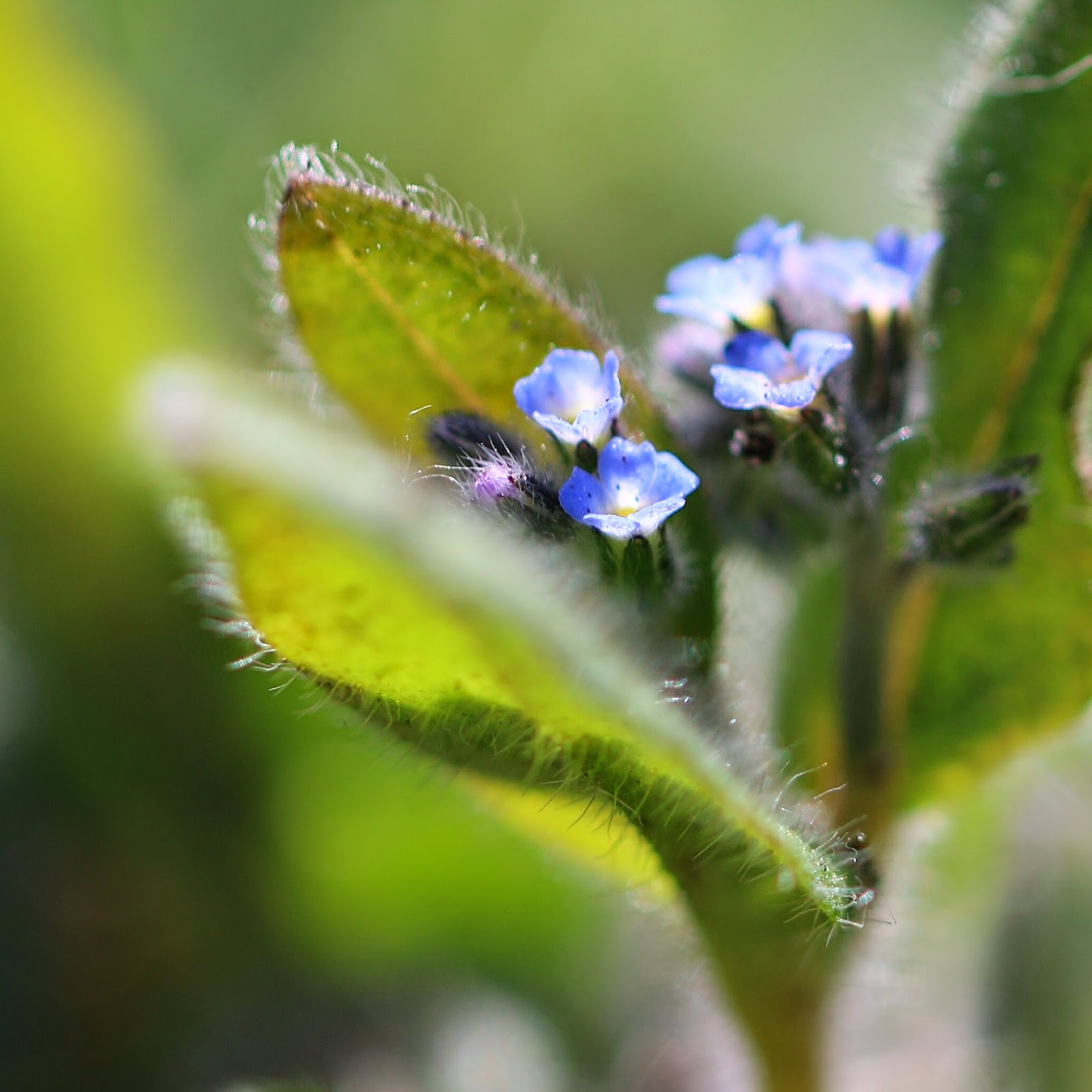
Myosotis ramosissima

English: Early Forget-me-not
Nederlands: Ruw vergeet-mij-nietje
Español: Nomeolvides temprano - Nomeolvides de las colinas - Nomeolvides azul
Français: Myosotis rameux - Myosotis hérissé
Deutsch: Hügel-Vergissmeinnicht - Raues Vergissmeinnicht

Family: Boraginaceae - Borage family
Flowering time: April-July
Height: 5-30cm
Altitude: to 2100m
Colour: bright blue
Flower: 1,5-3mm
Leaves: in a rosette, lanceolate, stem leaves oblong, unstalked
Habitat: pastures, ditches, fields, roadsides, dunes, dry open habitats
Distribution: throughout northern, western and central Europe
Synonyms: Myosotis gracillima - Myosotis hispida


Notes: Early Forget-me-not is one of the first Forget-me-nots to come into flower in early spring.

Related key words: Kapittelduinen Hoek van Holland, Sierra de Huétor, Andalucía, Pyrenees, Pyreneeën, Pirineos

Borago officinalis

Borago officinalis - Borage - Bernagie - Borraja - Bourrache - Borretsch
English: Borage - Starflower
Nederlands: Bernagie - Komkommerkruid
Español: Borraja - Borraina
Français: Bourrache - Bourrache officinale
Deutsch: Borretsch - Boretsch - Gurkenkraut

Family: Boraginaceae - Forget-me-not family
Flowering time: March-autumn
Height: 20-60cm
Altitude: to 1100m
Colour: bright blue with a whitish centre, sometimes white or pink
Leaves: basal leaves oval to lanceolate, stalked, stem leaves smaller
Habitat: waste ground, waysides and cultivated land, often in rather dry sunny places
Distribution: native to Mediterranean Europe


Notes: Fowers half-nodding and rather star-shaped, with spreading pointed lobes and a prominent cone of purple-black stamens, borne in branched cymes. It is cultivated and used widely throughout Europe for its healing properties and culinary uses. Borage is cultivated on a field scale for its oil-rich seeds. It is naturalized in Great Britain, the Netherlands and France, but also in mediterranean countries where is is cultivated as well.

Related key words: Rotterdam, Botanische tuin Kralingen, Cádiar, Alpujarras

Myosotis alpestris

Alpine Forget-me-not - Alpenvergeet-mij-nietje -  Nomeolvides alpino - Myosotis des Alpes - Alpen-Vergissmeinnicht
English: Alpine Forget-me-not - Alpine Wood Forget-me-not
Nederlands: Alpenvergeet-mij-nietje
Español: Nomeolvides alpino - Nomeolvides de los Alpes
Français: Myosotis des Alpes
Deutsch: Alpen-Vergissmeinnicht

Family: Boraginaceae - Borage family
Flowering time: April-September
Height: 5-25cm
Altitude: 700-3000m
Colour: bright blue, deep blue
Leaves: rather rough hairy, basal leaves in a rosette
Habitat: damp woods, meadows, mountain rocks
Distribution: mountains of Europe, from Scotland and the Carpathians to northern Spain (Asturias, Cantabrica, Huesca, León) and Bulgaria
Synonyms: Myosotis alpina - Myosotis sylvatica subsp. alpestris


Note: Some people consider the Myosotis alpina to be a different species, endemic to the Pyrenees (max 15cm). Similar to the rarer Arctic Alpine Forget-me-not or King of the Alps (Eritrichium nanum) which has tiny basal leaves. In the Netherlands, Belgium and Great Britain the Alpine Forget-me-not is cultivated in gardens.

Related key words: Pyreneeën, Pirineos, Coll de la Renclusa, Cerler-Ampriú (Benasque), El Portalet (Sallent de Gállego), Bujaruelo (Torla), Picos de Europa, Alps, Alpine plant

Pentaglottis sempervirens

Green Alkanet - Overblijvende ossentong - Lengua de buey - Buglosse toujours verte - Grüne Ochsenzunge
English: Green Alkanet - Evergreen Bugloss - Alkanet
Nederlands: Overblijvende ossentong
Español: Lengua de buey
Français: Buglosse toujours verte
Deutsch: Grüne Ochsenzunge - Spanische Ochsenzunge

Family: Boraginaceae - Borage family
Flowering time: April-July
Height:30-90cm
Altitude: to 1600m
Colour: bright blue with a white scaly throat
Habitat: damp or shaded places, woodland margins, cultivated land, close to buildings
Distribution: native to southwestern Europe
Synonyms: Anchusa sempervirens - Caryolopha sempervirens


Note: Naturalized in Belgium, the Netherlands and Great Britain; in these countries the Green Alkanet was introduced as a garden plant.

Related key words: Rotterdam, Botanische tuin Kralingen, bijgoed stinsenflora, Picos de Europa, Puerto de Pandetrave, Posada de Valdeón, butterfly, Boloria selene

Echium vulgare

English: Viper's Bugloss - Blueweed
Nederlands: Slangenkruid
Español: Viborera - Culebrera - Buglosa
Français: Vipérine commune
Deutsch: Gewöhnliche Natternkopf - Blaue Natternkopf

Family: Boraginaceae - Borage family
Flowering time: May-September
Height: 20-90cm

Altitude: to 2300m
Colour: pale to bright blue or blue violet, pink in bud
Habitat: dry open habitats, pastures, roadsides, fallow land, olive groves
Distribution: throughout Europe, except in the far north


Notes: Viper's Bugloss is the first year only a basal rosette of narrow leaves. The flowers develop in the second year. After maturation of the seeds the plant dies back and the two-year cycle repeats itself.
 
Related key words: Alpujarras, finca, Pyrenees, Pyreneeën, Pirineos, Cerler-Ampriú, Nigüelas, Sierra Nevada, waardplant, host plant, butterfly, Hummingbird hawk-moth